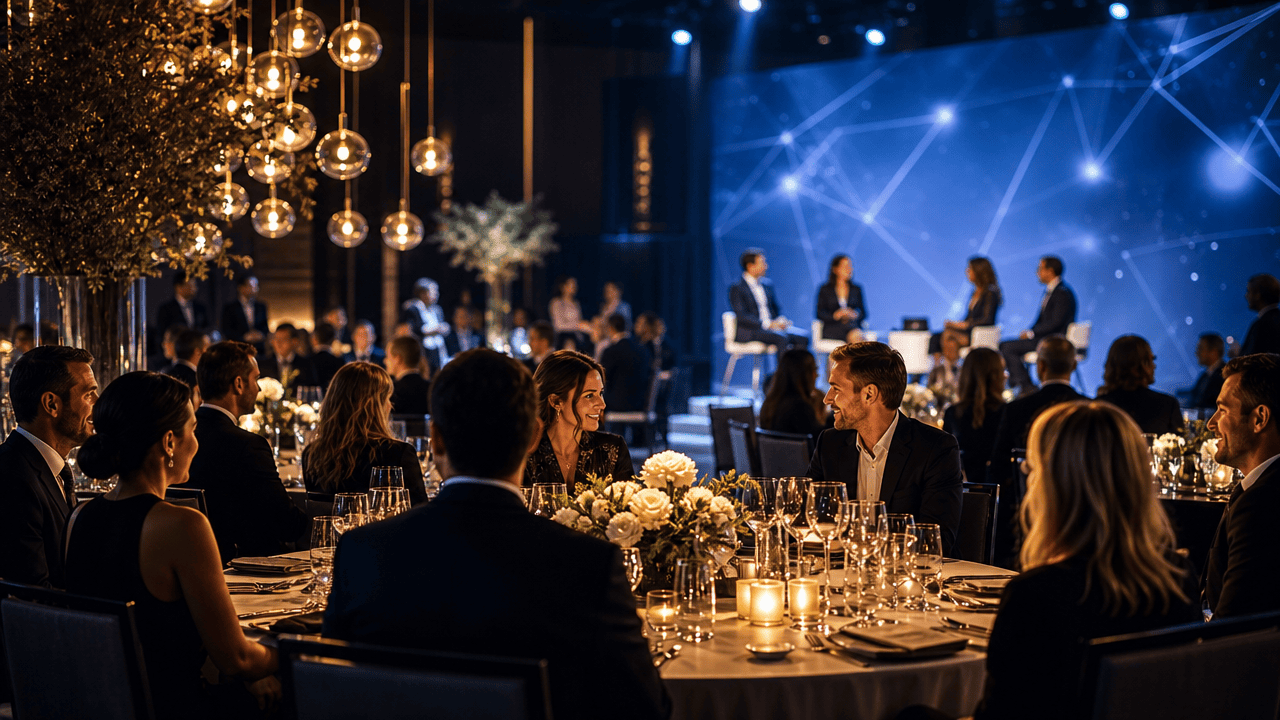
The corporate gala dinner has a strange rule: almost everyone organizes it the same way, and that’s why almost all of them end up being interchangeable. What separates a memorable gala from a forgettable one isn’t the catering or the venue — it’s the show. And the right show depends on 4 variables almost nobody looks at in order.
This guide is the decision framework we use with the international companies we produce for: how to choose the right show for your corporate gala dinner based on tone, audience, budget and venue.
Variable 1 · The real audience (not the one the brief describes)
The brief always says “mixed international audience 30-55 years old”. It’s almost never the real audience. Before choosing the show, answer 3 concrete questions:
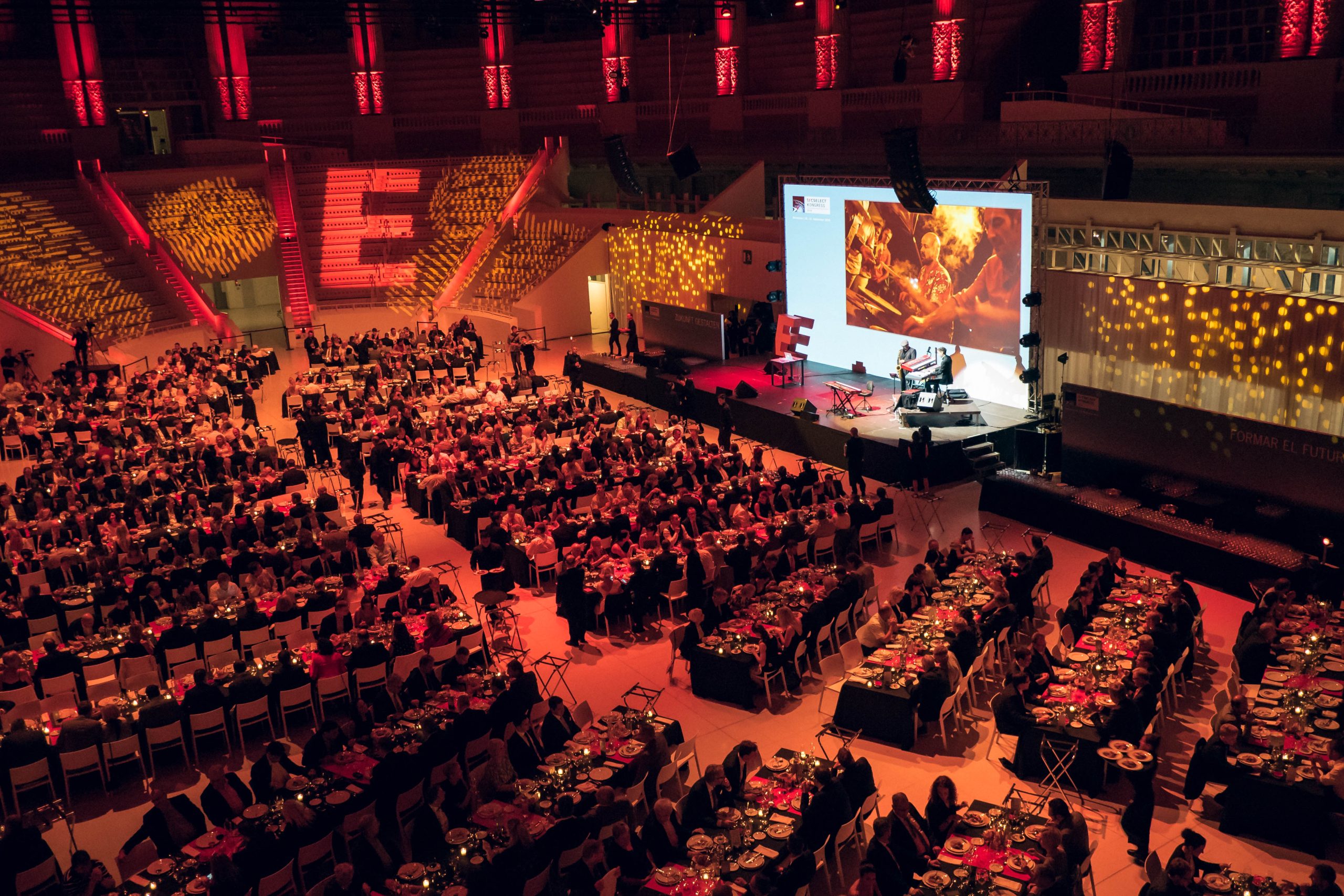
- Is it a decision-maker audience or a team audience? A board of C-levels with key clients needs a show that reinforces brand seriousness (sophisticated jazz, string quartet, premium contemporary dance). An internal-team convention tolerates and enjoys WOW-effect shows much better (LED dancers, laser, aerial).
- How much will they have drunk when the show starts? Show before dinner vs show during the courses vs show after coffee requires a completely different emphasis and format. A final show with alcohol needs high energy; an opening show demands elegance.
- Are there mixed languages in the audience? A verbal show (magic, monologue, host) dies if 40% of the audience doesn’t dominate the language. A visual show (dance, music, laser) works in any language.
Variable 2 · The tone the brand wants to convey
The show speaks on behalf of the brand. These are the 4 tones we apply and what type of show fits each:
Understated premium tone
Luxury brands, financial firms, institutional brands. Ideal shows: string quartet, jazz trio, contemporary dance, classical music. Productions that emphasize artistic quality over sensory impact. Everyone watches, nobody shouts.
Epic dramatic tone
Launches, company anniversaries, convention closings with a strong narrative. Ideal shows: aerial dance, hand-to-hand acrobatics, live orchestra, choirs. We produce this type of show for brands looking to mark the moment as a milestone in internal communications.
High-energy festive tone
Year-end parties, sales team conventions, brands with a youthful narrative. Ideal shows: LED dancers, live band tribute act, DJ set with visual show, urban artists, brass band. The goal is to get everyone up and participating. This closing brass band is a clear example.
Immersive experiential tone
Tech brands, arts, premium cultural proposals. Ideal shows: projection mapping, laser show, vertical dance, interactive installations. The show and the venue merge into a complete sensory experience. We produce this type of show when the brand aims for “it wasn’t an event, it was an experience”.
Variable 3 · Real budget vs market ranges
Reference ranges we apply to the initial brief (all VAT-in and basic production included — not final until specific technical briefing):
- Single artistic show (violinist, sax, DJ): €800 – €2,500
- Small format show (string quartet, jazz trio, aerial duo): €1,800 – €4,500
- Medium show (5-7 musician band, LED dancer group, contemporary dance): €3,500 – €8,000
- Large format show (10+ musicians, aerial dance + choreo, orchestra): €6,500 – €18,000
- WOW-effect show + dedicated technical production (laser, mapping, immersive): €12,000 – €45,000+
Typical mistake: trying to squeeze a large-format show into a small-format budget. Result: production visible as “low-cost premium” — the worst place a corporate gala can end up.
Golden rule: better a flawless small show than a mediocre large one. A top string quartet with correct sound production is infinitely better than a large band poorly amplified.
Variable 4 · The venue defines what show is possible
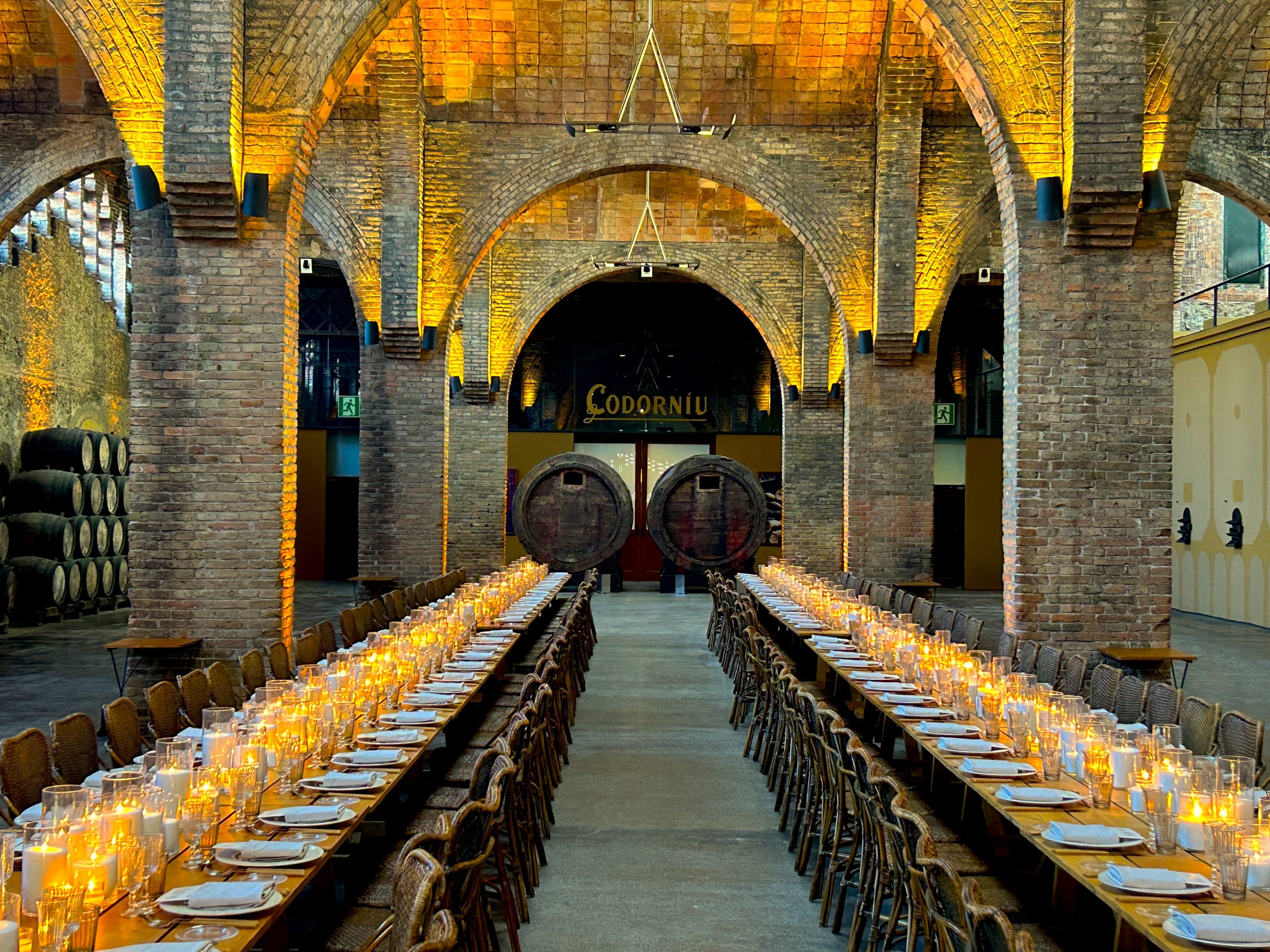
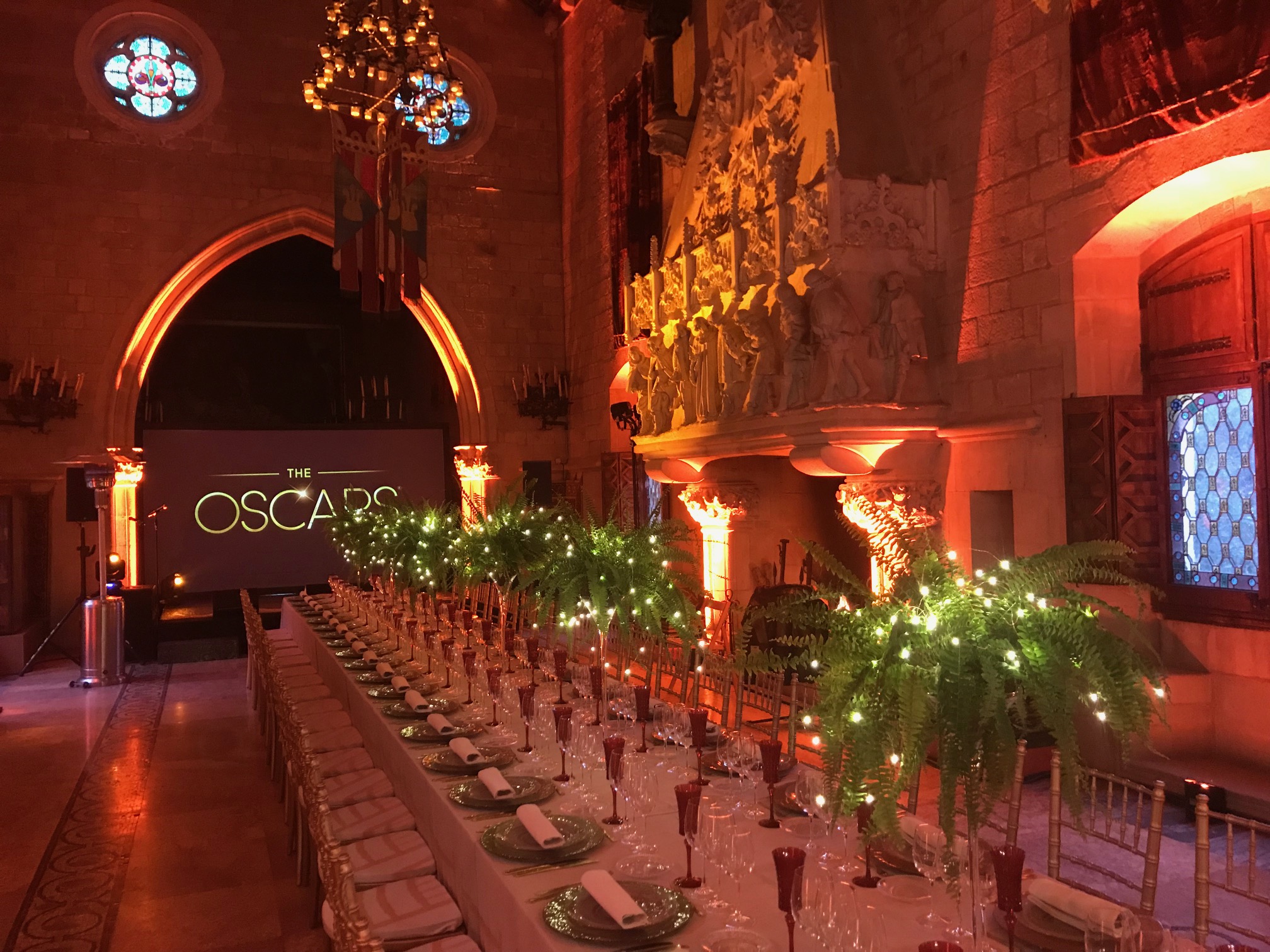
One of the most expensive mistakes: closing the show before closing the venue. Each type of space opens and closes specific options. These are the combinations we produce regularly:
Heritage venues (MNAC, Llotja de Mar, Palau de la Música)
Ideal shows: classical music, string quartet, contemporary dance, architectural mapping. Forbidden or difficult: laser, pyrotechnics, elaborate costume shows, aerial with ceiling-anchored structure.
5-star hotel (Arts, W Barcelona, Palace)
Ideal shows: LED dancers, live band, DJ + visuals, contemporary dance, musical tribute acts. Forbidden or difficult: fire, pyrotechnics, exterior laser (except some terraces), aerial with ceiling-limited height.
Outdoor venue (Poble Espanyol, Pedralbes, Castell de Montjuïc)
Ideal shows: laser, mapping, pyrotechnics, drones, large-scale aerial, vertical dance on structure, large-format band with full backline. Forbidden or difficult: shows that rely on enclosed acoustics.
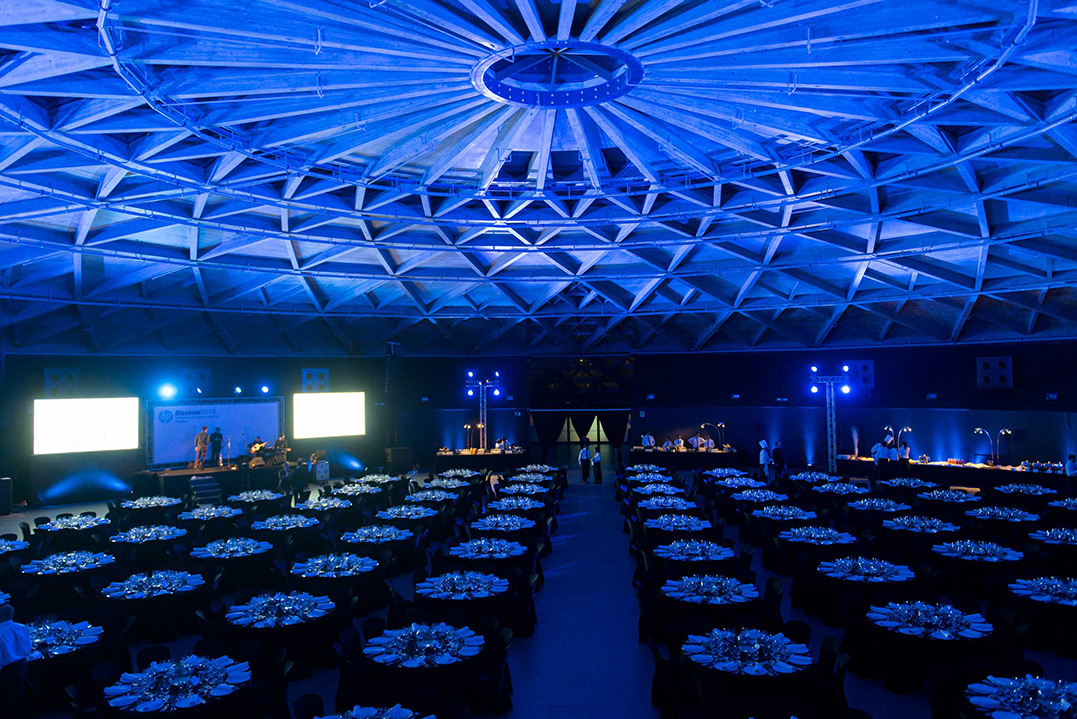
Reconverted industrial venue
Ideal shows: almost everything — aesthetic neutrality and high ceiling allow aerial, laser, LED, live music. The challenge is acoustics, which requires dedicated sound production.
Sequencing inside the event matters as much as the show itself
The same show can succeed or fail depending on when it’s executed. This is the sequencing guide we apply:
- Cocktail and reception (6:30-8:00 pm): ambient music — jazz trio, sax, chill DJ. Elegant background that allows conversation.
- Entry to the ballroom (8:00-8:30 pm): short welcome show — 3-5 minutes of contemporary dance or classical music. Marks the transition.
- During the courses (8:30-10:30 pm): soft live music or silence with show pauses between courses. NO powerful show during the meal — no one watches.
- Main show (10:30-11:00 pm): the signature show. 20-30 minutes. It’s the event’s peak. Everyone will remember it.
- After-dinner and dance (11:00 pm – 1:00 am): DJ + LED dancers + interactive saxophonist. Everyone participates. High energy.
Common mistakes when choosing shows for a corporate gala
- Choosing based on what the marketing director likes instead of what the audience will value
- Booking a spectacular show during the main course — nobody watches, and the show loses 80% of its impact
- Booking show and venue with less than 3 months notice for large format — the best artists are booked 6+ months out
- Not budgeting technical production for the show — a large format show needs dedicated sound, stage lighting and sometimes its own backline. It can double the show’s cost
- Choosing a verbal show when the audience is multi-language — humor doesn’t translate, magic does
Frequently asked questions
What is the best impact/cost ratio show for a corporate gala?
A high-level string trio (€2,200-3,500) with correct sound production is the best ratio between brand impression and cost. Silent, elegant, universal. Second place: aerial duo (2 acrobats) that takes 4-6 minutes and produces the event’s photo moment.
Can EB produce shows with artists from other countries?
Yes. We regularly produce shows with international artists we bring specifically for the project — from musical tributes from the brand’s country of origin to European circus artists and vertical dance choreographies from France or Italy. Timing: minimum 3 months.
What if my brand already has a favorite artist or band?
We can manage the booking and technical production of the artist the brand chooses (schedule, contract, technical rider, backline). It’s a common format when the brand has an ambassador artist or simply a clear commercial preference.
Do you offer show + technical production as a single package?
Yes — it’s our main format. Artistic production (concept + shows + artists) + technical production (sound, stage lighting, LED screens, stages, rigging). Single team, single point of contact. The coordination between artistic and technical is where many events break — offering it integrated removes that risk.
Are you organizing a corporate gala dinner? Discover our full-service offering or explore our case studies with Huawei, Aston Martin, HP, Spribe and other global brands.